Human Orbital Spaceflights

International Flight No. 144STS-42Discovery (14)45th Space Shuttle missionUSA |
 |
 |
 |
||
Launch, orbit and landing data
walkout photo |
 |
||||||||||||||||||||||||||||
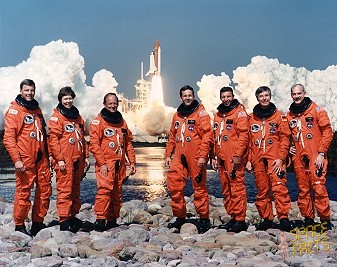
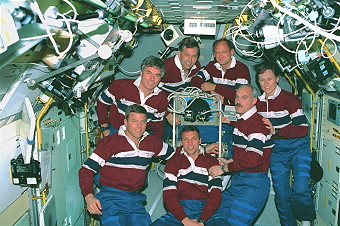
alternative crew photo |
Crew
| No. | Surname | Given names | Position | Flight No. | Duration | Orbits | |
| 1 |  |
Grabe | Ronald John | CDR | 3 | 8d 01h 14m 44s | 129 |
| 2 | |
Oswald | Stephen Scot | PLT | 1 | 8d 01h 14m 44s | 129 |
| 3 | |
Thagard | Norman Earl | MS-1, PLC, EV-1 | 4 | 8d 01h 14m 44s | 129 |
| 4 | |
Readdy | William Francis "Bill" | MS-2, EV-2, FE | 1 | 8d 01h 14m 44s | 129 |
| 5 | |
Hilmers | David Carl | MS-3 | 4 | 8d 01h 14m 44s | 129 |
| 6 |  |
Bondar | Roberta Lynn | PS-1 | 1 | 8d 01h 14m 44s | 129 |
| 7 |  |
Merbold | Ulf Dietrich | PS-2 | 2 | 8d 01h 14m 44s | 129 |
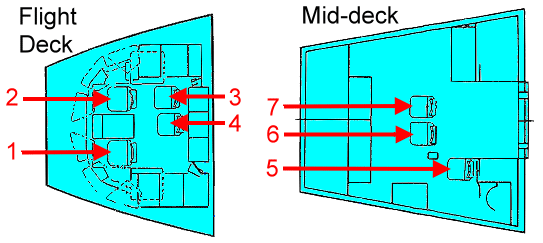
Crew seating arrangement
|
 |
|
||||||||||||||||||||||||||||||||
Backup Crew
|
 |
|||||||||||||||
Hardware
| Orbiter : | OV-103 (14.) |
| SSME (1 / 2 / 3): | 2026 (2.) / 2022 (7.) / 2027 (7.) |
| SRB: | BI-048 / RSRM 20W |
| ET: | ET-52 (LWT-45) |
| OMS Pod: | Left Pod 04 (11.) / Right Pod 03 (15.) |
| FWD RCS Pod: | FRC 3 (14.) |
| RMS: | - |
| EMU: | EMU No. 2013 (PLSS No. 1005) / EMU No. 2017 (PLSS No. 1013) |
Flight
|
Launch from Cape Canaveral (KSC) and
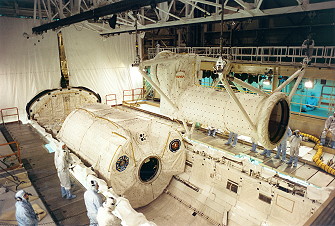
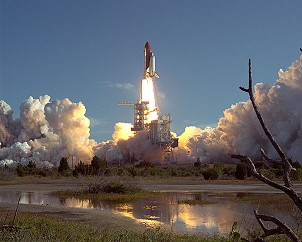
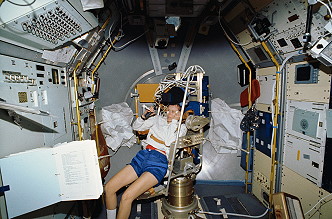
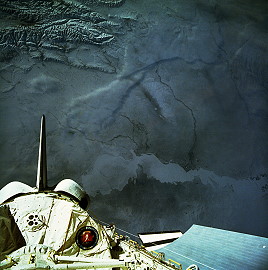
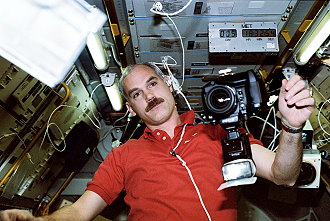
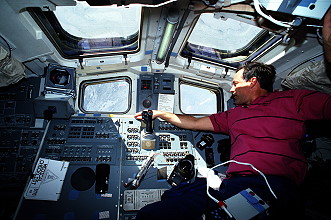
landing on Edwards AFB, Runway 22. The launch was delayed one hour due to weather constraints. Manley L. Carter, was originally assigned to fly as a Mission Specialist for this mission, but died seven months prior the launch. The single gold star in the mission patch above the horizon on the right is in honor of astronaut Manley "Sonny" Carter. David Hilmers was then chosen to replace him. Main objective of STS-42 was to carry the International Microgravity Laboratory IML-1 into orbit. Scientists from NASA, the European Space Agency, the Canadian Space Agency, the French National Center for Space Studies, the German Space Agency and the National Space Development Agency of Japan have cooperated in planning experiments aboard the International Microgravity Laboratory-1. Along with the IML-1 module, 12 Get Away Special containers were mounted in Discovery's cargo bay containing experiments ranging from materials processing work to investigations into the development of animal life in weightlessness. Two experiments developed by students and submitted to NASA under the Space Shuttle Student Involvement Program flew on Discovery as well. IML-1 was housed in a pressurized manned Spacelab module, to explore in depth the complex effects of weightlessness on living organisms and materials processing. To complete as many experiments as possible, the crew worked in 12-hour shifts around the clock. The international crew was divided into Red (David Hilmers, William Readdy and Ulf Merbold) and Blue (Ronald Grabe, Stephen Oswald, Norman Thagard and Roberta Bondar) teams. Biorack advanced our knowledge of the fundamental behavior of living organisms. Broadly speaking there were five areas of research to be addressed by Biorack: cell proliferation and differentiation, genetics, gravity sensing and membrane behavior. The cells to be examined will include those of frogs, fruit flies, humans and mice. Exposure to microgravity will alter the regulatory mechanisms at a cellular level. The facilities aboard Biorack allowed manipulation and study of large numbers of cells. Over the mission in space, these cells could be observed at various stages of their development. Specimens could be preserved at those stages and returned to Earth for detailed analysis. Leukemia Virus Transformed Cells to Microgravity in the Presence of DMSO: This was one of three Biorack experiments being flown on the IML-1 mission as part of an investigation to study cell proliferation and performance in space. The purpose of this particular experiment was to study the adaptation of living cells to microgravity. Previous experiments have shown that blood cells - both white blood cells that fight infection and red blood cells that transport oxygen throughout the body - are sensitive to gravity. On Earth, cells that normally would differentiate to become blood cells are sometimes transformed by the leukemia virus and become cancerous Friend leukemia cells. Such cells do not produce hemoglobin, which plays an essential role in oxygen transport. But when exposed to a drug called dimethylsufoxide (DMSO), Friend cells produce hemoglobin. By studying these cells in microgravity, scientists may determine how the gene responsible for hemoglobin synthesis is regulated. Proliferation and Performance of Hybridoma Cells in Microgravity (HYBRID): This experiment was part of an investigation to study cell proliferation and performance in space. The purpose of this experiment was to study how cell performance (biosynthesis and secretion) is altered by altered gravity conditions. If cells produce material more rapidly in space, it may be practical to manufacture some pharmaceutical products in space. Hybridoma cells are obtained by fusion of activated white blood cells (B-lymphocytes) with cancerous tumor cells (melanoma cells). Activated B-lymphocytes, derived from a human or an animal, carry the information required to produce antibodies of a certain specificity and can survive only a few days in culture. Myeloma cells are tumor cells which can grow indefinitely in culture. Therefore, the product of the fusion is a continuing cell line capable of producing homogeneous antibodies (monoclonal antibodies) more rapidly than white blood cells alone. Growing these cell cultures in microgravity will allow scientists to compare the amount of their antibody secretions to those grown on Earth. Dynamic Cell Culture System (CULTURE): This experiment was part of an investigation studying cell proliferation and performance in space. One of the objectives was to assess the potential benefits of bioprocessing in space with the ultimate goal of developing a bioreactor for continuous cell cultures in space. This experiment tested the operation of an automated culture chamber, the Dynamic Cell Culture System (DCCS), that was designed for use in a bioreactor in space. The DCCS was a simple device for cell cultures in which media are reviewed or chemicals are injected automatically by means of osmotic pumps. As culture nutrients flow into the cell container, old medium is forced out. The system was designed to operate automatically for 2 weeks. Chondrogenesis in Micromass Cultures of Mouse Limb Mesenchyme Exposed to Microgravity (CELLS): This investigation studied the effect of microgravity on cartilage formation by embryonic mouse limb cells in culture. The susceptibility of cartilage cells to gravitational changes is well documented. Cartilage impairments found in rodents flown on previous space flights are similar to those observed in skeletal malformations in children. Among these are changes in the collagen molecules - the major support fibers of cartilage and bone. By studying how gravity affects cartilage formation, scientists may learn subtle aspects of cartilage development on Earth. Effects of Microgravity and Mechanical Stimulation on the In-Vitro Mineralization and Resorption of Fetal Mouse Bones (BONES): In this experiment, scientists studied the response to microgravity of embryonic mouse leg bones. Scientists postulate that the uncompressed cultures grown outside the centrifuge (under microgravity conditions) should respond like bones that are unstressed in a weightless environment. To test this hypothesis, both the microscopic structure and the biochemical make-up of the cultures are analyzed to determine their mineralization and resorption rates. Why Microgravity Might Interfere With Amphibian Egg Fertilization and the Role of Gravity in Determination of the Dorsal/Ventral Axis in Developing Amphibian Embryos (EGGS): This experiment may help scientists clarify the role of gravity by studying fertilization of eggs and embryo formation of frogs in space. Before fertilization, each frog egg was positioned inside a sticky membrane that hold the parts of the egg random with respect to gravity. After the egg was fertilized, gravity aligned the lightest part of the egg (the part with the least yolk) up and the heaviest part of the egg (with the most yolk) down. Effects of Space Environment on the Development of Drosophila Melanogaster (FLY): This experiment involved the study of the development of eggs of the fly Drosophila (fruit fly) exposed to microgravity. It is presumed that cogenesis, rather than further states of embryonic development, is sensitive to gravity. This hypothesis was tested by collecting eggs laid at specific times in-flight and postflight from flies exposed to 0-g and 1-g. This portion of the experiment was a repetition of an earlier experiment flown in Biorack during the D1 Spacelab mission (STS-61A) in November 1985. An added feature of the experiment for the IML-1 mission was to study the effect of microgravity on the life span of Drosophila male flies. In this way more information were gathered on the processes affected by microgravity in complex organisms. Genetic and Molecular Dosimetry of HZE Radiation (RADIAT): One of the major features of the space environment is the presence of cosmic rays or HZE (high energy and charge) particles. Although they account for only about one percent of the radiation particles in space, they constitute about half of the total absorbed radiation dose. The experiment's purpose was to understand the biological effects of exposure to cosmic rays to protect space travelers on long missions. Exposure may place astronauts at risk for certain medical problems, such as cataracts, mutations and cancers. A microscopic soil nematode (roundworm) was used to "capture" mutations caused by cosmic rays, to evaluate whether certain genetic processes occur normally in space, and to test whether development and reproduction proceed normally in microgravity for up to three generations. Dosimetric Mapping Inside Biorack (DOSIMTR): The purpose of this experiment was to document the radiation environment inside the Biorack and to compare the experimental data with theoretical predictions. It provided documentation of the actual nature and distribution of the radiation inside Biorack. Special emphasis was given to measuring the radiation environment in the neighborhood of those experiments which might be especially critical to radiation effects, and so have a way of determining if changes to samples are caused by radiation or microgravity. Embryogenesis and Organogenesis of Carausius (MOROSUS): This experiment studied the influence of cosmic radiation, background radiation and/or low gravity on stick insect eggs (Carausius morosus) at early stages of development. Sandwiched between detectors, the eggs hit by radiation could be determined precisely. Other detectors allowed scientists to determine the nature, energy and direction of the incident particles. Gravity Related Behavior of the Acellular Slime Mold Physarum Polycephalum (SLIME): Many living things, including people, perform various activities, such as sleeping, at regular periods. Scientists are not certain whether these activities are controlled by an internal biological clock or by external cues such as day and night cycles or gravity. In space, these cues are absent, and investigators can examine organisms to see if these functions occur in regular circadian time frames. Physarum polycephalum, a slime mold that lives on decaying trees and in soil, has regular contractions and dilations that slowly move the cell. On Earth, gravity modifies the direction of cell movement. Any direct effects of microgravity should alter this movement and be evident as a change in circadian rhythm. Microgravitational Effects on Chromosome Behavior (YEAST): In this experiment, the effects of microgravity and radiation were monitored separately in the same organism by measuring genetic damage during mitosis and meiosis of common brewer's yeast. By employing both normal and radiation- sensitive cells, scientists can monitor frequencies of chromosomal loss, structural deformities and DNA mutation rates with a resolution impossible in higher organisms. Because yeast chromosomes are small, sensitive measurements can be made that can be extrapolated to higher organisms, including humans. Growth and Sporulation in Bacillus Subtilis Under Microgravity (SPORES): This experiment was aimed at measuring growth and sporulation of Bacillus subtilis bacteria under microgravity conditions. The influence of microgravity on enzyme distribution and the way the enzyme acts in the absence of gravity were studied by examining the structure and biochemistry of the spores after the mission. Studies on Penetration of Antibiotics in Bacterial Cells in Space Conditions (ANTIBIO): This experiment studied the effects of antibiotics in bacterial cells cultivated "in vitro" in space conditions. Proliferation rates of bacteria exposed to antibiotics will then be compared to those that were not exposed and to sets of bacteria grown on the ground. Transmission of the Gravity Stimulus in Statocyte of the Lentil Root (ROOTS): The purpose of this experiment was to study the growth of lentil seedlings to gain understanding of that organism's mechanism of gravity perception. On Earth, the roots of most plants can clearly perceive gravity since they grow downward. In space, under microgravity conditions, previous results from the D1 mission (STS-61A) on Spacelab (November 1985) have shown that roots loose their ability to orient themselves. Exposed to 1 g, the roots reorient themselves in the direction of the simulated gravity. Genotype Control of Graviresponse, Cell Polarity and Morphological Development of Arabidopsis Thaliana in Microgravity (SHOOTS): It is of high interest to determine what might be the long-term effects of microgravity on the growth of plants. The aim of this two-part experiment was be to quantify the structural and behavioral changes taking place in germinating seeds of the small plant Arabidopsis thaliana. One strain of this species, the wild type, was gravitropic. Its roots grow down and its shoots grow up. Another strain, aux-1, is an agravitropic mutant. Its roots and shoots grow in any direction. One experiment examined the differences in root and shoot development and orientation between these two strains. The other experiment investigated the effects of growth in microgravity on the polarity of the cells containing gravity sensors (statocytes). It also investigated its influence on the structure, orientation and distribution of their amyloplasts. Effects of Microgravity Environment on Cell Wall Regeneration, Cell Divisions, Growth and Differentiation of Plants From Protoplasts (PROTO): For this experiment, plant cells from carrots (Daucus carota) and a fodder plant, rape (Brassica napus) were prepared to make them into protoplasts, plant cells in which the cell walls have been removed. During the mission, a culture of protoplasts from each gravity environment was analyzed to determine whether the cell walls are reforming and whether the cells are dividing. They were later compared to plants grown from protoplasts that developed on the ground. The Gravitational Plant Physiology Facility (GPPF) included four centrifuges, lights, three videotape recorders and plant-holding compartments described below. Two culture rotors operated independently at the force of gravity (1g) to simulate Earth's gravitational field. Two variable-speed test rotors provide accurately controlled centripetal forces from 0g to 1g. Seedlings in plant cubes are placed in the rotors. Gravity Threshold (GTHRES): This experiment investigated the changes that occur when oat plants are exposed to different levels and durations of gravity. It studied how a growing plant responds to altered gravitational fields and how microgravity affects a plant's structure. Four centrifuges in the Gravitational Plant Physiology Facility were used to determine the sensitivity and threshold of the gravity-detecting mechanism of oat plants. Seedlings used early in the experiment germinated on the ground. For specimens used later in the mission, a crew member plant seeds in soil supplied with the right amount of water, and germination occurs in space. Response to Light Stimulation: Phototropic Transients (FOTRAN): This experiment investigated how plants respond to light (phototropism) in microgravity and the impact of microgravity on two other types of plant behavior. The first, nutation, was the rhythmic curving movement of plants caused by irregular growth rates of plant parts. The second, autotropism, was the straightening often observed in plants that were curved during tropic or nutational movements. These growth patterns occur naturally on Earth. Scientists wanted to learn details of how the movements change in microgravity. Microgravity Vestibular Investigations (MVI): For the investigations, STS-42 crew members were placed in a rotating chair with a helmet assembly outfitted with accelerometers to measure head movements and visors that fit over each eye independently to provide visual stimuli. The chair could be configured so that the subject could be sitting upright, lying on his side or lying on his back. The chair system had three movement patterns: "sinusoidal" or traveling predictably back and forth over the same distance at a constant speed, "pseudorandom" or moving back and forth over the varying distances and "stepped" or varying speeds and beginning and stopping suddenly. The test sequences were studied the effect of microgravity on six physiological responses, including the eye's ability to track an object, the perception of rotation during and after spinning, function of the motion and gravity sensing organs in the inner ear, the interaction between visual cues and vestibular responses and sensory perception. Crew members were tested both pre- and post-flight to establish a comparison for the in-flight measurements. The Mental Workload and Performance Experiment studied the influences of microgravity on crew members performing tasks with a computer workstation. The STS-42 crew used a redesigned workstation with an adjustable surface for their daily planning sessions and record keeping. Cameras recorded the crew's range of motion and variety of positions while at the workstation. During tests of mental function, reaction times and physiological responses, crew members evaluated a portable microcomputer. The microcomputer with its display monitor and keyboard was attached to a Spacelab handrail and positioned in the most convenient location. The crew member memorized a sequence of characters, then moved the cursor to the target with keyboard cursor keys, a two-axis joystick and a track ball. The crew performed the activities several times before and after the mission to provide a comparison for the in-flight experiments. Canadian astronauts Roberta Bondar and Kenneth Money were the Canadian prime and alternative payload specialists, respectively, for the first International Microgravity Laboratory (IML-1) mission. The Canadian Space Physiology Experiments (SPE) on IML-1 investigated human adaptation to weightlessness and other phenomena. The human vestibular and proprioceptive (sense of body position) systems, energy expenditure, cardiovascular adaptation, nystagmus (oscillating eye movement) and back pain in astronauts were studied. Space Adaptation Syndrome Experiments (SASE): Many astronauts experience space adaptation syndrome, which may include illusions, loss of knowledge of limb position, nausea and vomiting. These symptoms may occur because of conflicting messages about body position and movement which the brain receives from the eyes, the balance organs of the inner ear and gravity sensing receptors in the muscles, tendons, and joints. Seven investigations to study the nervous system's adaptation to microgravity were developed: Sled Experiment, Rotation Experiment, Visual Stimulator Experiment, Proprioceptive Experiments, Energy Expenditure in Spaceflight (EES), Position and Spontaneous Nystagmus (PSN), Measurement of Venous Compliance & Evaluation of an Experimental Anti-Gravity Suit (MVC), Assessment of Back Pain in Astronauts (BPA), Phase Partitioning Experiment (PPE). Biostack: Four Biostack packages, located in a Spacelab rack under the module floor, gathered data to be used in calculating potential effects of exposure to cosmic radiation in space. The packages contained single layers of bacteria and fungus spores, thale cress seeds and shrimp eggs sandwiched between sheets of nuclear emulsion and plastic radiation detectors. Scientists analyzed the resulting data to track the path an energized particle takes through Biostack and then determine the level of radiation damage to the organisms. Findings from this investigation also will be studied to see if better radiation protection is needed in certain areas of Spacelab. Radiation Monitoring Container Device (RMCD): In the Radiation Monitoring Container Device, mounted in the aft end of the Spacelab, layers of cosmic ray detectors and bacteria spores, maize seeds and shrimp eggs are sandwiched together and enclosed on all sides by gauges that measure radiation doses. After being exposed to cosmic radiation for the duration of the mission, the plastic detectors were chemically treated to reveal the three-dimensional radiation tracks showing the path the radiation traveled after entering the container. The specimens were examined by biological and biochemical methods to determine the effects of radiation on the enclosed organisms. The results of this investigation were used in developing a sensitive solid-state nuclear detector for future spaceflights and to improve basic understanding of radiation biology. The Protein Crystal Growth investigation was made up of 120 individual experiments designed for the low gravity environment of space. Located in two refrigerator/incubator modules carried in the orbiter middeck, these experiments operated by the vapor diffusion method of crystal growth. For each experiment, liquids from a double-barreled syringe are released and suspended as droplets on the ends of the syringes. Water vapor then moves out of the droplets in each growth chamber and into a reservoir, stimulating growth of the protein crystal. After the mission, the crystals were returned to the laboratory where scientists hoped to find larger, less-flawed crystals then those produced on Earth. CRYOSTAT: The Cryostate provided a temperature-controlled environment for growing protein crystals by liquid diffusion under two different thermal conditions. The facility could operate in either the stabilizer mode with a constant temperature between 59- and 77-degrees Fahrenheit (15 and 25 degrees Celsius) or the freezer mode where temperatures could be varied from 17.6 to 77 degrees Fahrenheit (-8 to 25 degrees Celsius). Temperatures were controlled by preprogrammed commands, but crew members could reprogram the computer if necessary. When the experiments were started, solutions of a protein, a salt and buffer mix via diffusion to initiate crystal growth. Single Crystal Growth of Beta-Galactosidase and Beta-Galactosidase/Inhibitor Complex: Beta-galactosidase, an enzyme found in the intestines of human and animal babies, as well as in E. coli bacteria, aids in the digestion of milk and milk products. It is a key enzyme in modern genetics, and scientists wanted to determine its three-dimensional molecular makeup to find out how the structure affects its function. Beta-galactosidase was the first protein crystallized in space using the Cryostat in Spacelab 1 (STS-9) in 1983. For IML-1, scientists attempted to grow higher quality crystals. Cryostat was used in the freezer mode, at temperatures ranging from 24.8 to 68 degrees Fahrenheit (-4 to 20 degrees Celsius), for this investigation. Crystal Growth of the Electrogenic Membrane Protein Bacteriorhodopsin: This experiment used the Cryostat in the stabilizer mode, with the temperature being maintained at 68 degrees Fahrenheit (20 degrees Celsius). The protein to be crystallized was bacteriorhodopsin, a well-known membrane protein that converts light energy to voltages in the membranes of certain primitive microorganisms. Resolution of the three-dimensional structure, which should help biologists understand how bacteriorhodopsin works, depends on the availability of large, high quality crystals. Crystallization of Proteins and Viruses in Microgravity by Liquid-Liquid Diffusion: One protein, canavalin, and one virus, satellite tobacco mosaic virus, were crystallized in this investigation. Three samples of each substance were crystallized during the mission. One sample of each was placed in the freezer mode with the temperature being varied from 28.4 to 68 degrees Fahrenheit (-4 to 20 degrees Celsius) and the other sample was grown in the stabilizer mode with a temperature of 68 degrees Fahrenheit (20 degrees Celsius). The crystals were analyzed to determine the potential benefits of microgravity along with the effects of diverse temperature conditions. Another objective of this experiment was to compare crystals grown in the Cryostat using the liquid diffusion method with those grown in the Protein Crystal Growth hardware using the vapor diffusion method. The Fluids Experiment System was a facility with a sophisticated optical system for showing how fluids flow during crystal growth. The optical system included a laser for producing three-dimensional holograms of samples and a video camera for recording images of fluid flows in and around the samples. Study of Solution Crystal Growth in Low-Gravity (TGS): This experiment used the Fluids Experiment System to grow crystals from a seed immersed in a solution of triglycine sulfate. The original seed was a slice from the face of a larger crystal grown on Earth. In space, it was immersed in a solution of triglycine sulfate, which is initially heated slightly to remove any surface imperfections from the seed. As the seed was cooled, dissolved triglycine sulfate incorporated around the seed, forming new layers of growth. Video was returned to Earth during the experiment, allowing scientists to monitor the growth of the crystal and if necessary, instruct the crew to adjust the temperature. Triglycine sulfate crystals have potential for use as room-temperature infrared detectors with applications for military systems, astronomical telescopes, Earth observation cameras and environmental analysis monitors. An Optical Study of Grain Formation: Casting and Solidification Technology (CAST): Advanced alloys, which are made by combining two or more metals or a metal and a nonmetal, are essential for such products as jet engines, nuclear power plant turbines and future spacecraft. As alloys solidify, the components redistribute themselves through the liquid and in the solid. To study this solidification process, scientists used three experiment samples of a salt (ammonium chloride) which, in water solution, models the freezing of alloys. The salt solution was transparent, which made it ideal for observations of fluid flow and crystallization. Up to 11 experiments ran, using the samples repetitively. Using the sophisticated FES optical equipment, scientists were able to monitor the experiment from the ground and if necessary, request that the crew make changes to experiment procedures during the present or future runs. Mercuric iodide crystals have practical uses as sensitive X-ray and gamma-ray detectors. In addition to their exceptional electronic properties, these crystals can operate at room temperature. This makes them potentially useful in portable detector devices for nuclear power plant monitoring, natural resource prospecting, biomedical applications and astronomical observing. Although mercury iodide has greater potential than existing detectors, problems in the growth process cause crystal defects. For instance, the crystal is fragile and can be deformed by its own weight. Scientists believe the growth process can be controlled better in a microgravity environment and that such problems can be reduced or eliminated. Two facilities will be used to grow mercury iodide crystals during IML-1. The Organic Crystal Growth Facility was designed to grow high-quality superconductor crystals from a complex organic compound. Researchers were interested in this compound because it can P- at certain temperatures P- transfer electric current with no resistance, just like a metal superconductor. Because of the potential technological value, scientists wanted to grow a single crystal 10 times larger than ground-based ones to study its natural physical properties. Superconductors are key components of computers, communication satellites and many other electrical devices. The facility had one chamber for growing a large crystal and a small chamber with a window for observing the growth of a smaller crystal. A seed crystal was mounted on a gold wire in the center section of each chamber. When the experiment was started, valves were opened, allowing donor and acceptor solutions to diffuse into the crystal-growth chamber in which a seed crystal was suspended in an acetone solvent solution. Near the end of the mission, a crew member raised the crystal into a protective chamber for later analysis. ESA's Critical Point Facility was designed for the optical study of fluids at their "critical point", where a precise combination of temperature and pressure makes the vapor and liquid states indistinguishable. Scientists were interested in what happens to materials at their critical points because critical point phenomena are universally common to many different materials. Physically different systems act very similarly near their critical points. Observations such as these are hampered on Earth, since as soon as vapor begins to liquefy and form droplets, gravity pulls the drops down. IML-1 was the first Space Shuttle flight for the Critical Point Facility, so results gained during this mission were expected to provide new insights on fundamental questions about the basic physics of substances undergoing phase changes. During the first days of the mission, the payload crew activated critical biological and material experiments and set up those involving plants, cells and crystals. Much of the crew time throughout the mission was devoted to experiments which measured how their own bodies adapt to living in space. In the middle of the mission, processing research was continued and experiments which required precisely timed activities were carried out. Experiments also continued with plants, cells and other biological specimens. The crew checked investigations periodically, made adjustments needed to enhance results and when necessary, replaced specimens or preserved them for ground-based analysis. The payload crew aboard Spacelab used both voice and video links to consult with scientists on the ground during critical operations and to modify experiments as required. The Space Acceleration Measurement System (SAMS) was designed to measure and record low-level acceleration that the Spacelab experiences during typical on-orbit activities. The three SAMS sensor heads were mounted on or near experiments to measure the acceleration environment experienced by the research package. The signals from these sensors were amplified, filtered and converted to digital data before being stored on optical disks. On STS-42, the SAMS main unit was mounted in the Spacelab's center aisle. The unit contained the data processing electronics, two optical disk drives and the control panel for crew interaction. A sensor head was mounted under the floor at the Microgravity Vestibular Investigation rotating chair which also was located in the Spacelab center aisle. The first two SAMS units were flown on the first Spacelab Life Sciences mission on STS-40 in June 1991 and on the middeck in STS-43 in August 1991. The Gelation of Sols: Applied Microgravity Research (GOSAMR) was a middeck materials processing experiment. The objective of GOSAMR-1 was to investigate the influence of microgravity on the processing of gelled sols - or dispersions of solid particles in a liquid often referred to as colloids. Stoke's law predicts that there will be more settling of the denser and larger-sized particulates in Earth's unit gravity as compared to the differentiation that should occur in a microgravity environment. In particular, GOSAMR attempted to determine whether composite ceramic precursors composed of large particulates and small colloidal sols can be produced in space with more structural uniformity and to show that this improved uniformity will result in finer matrix grain sizes and superior physical properties. The GOSAMR experiment attempted to form precursors for advanced ceramic materials by using chemical gelation. Chemical gelation involves disrupting the stability of a sol and forming a gel (semi-solid material). These precursor gels was returned to 3M, dried and fired to temperatures ranging from 900 to 2,900 degrees F. to complete the fabrication of the ceramic composites. These composites then were evaluated to determine if processing in space has indeed resulted in better structural uniformity and superior physical properties. The Investigations into Polymer Membrane Processing (IPMP), a middeck payload, made its fifth Space Shuttle flight. The objective of the IPMP was to investigate the physical and chemical processes that occur during the formation of polymer membranes in microgravity such that the improved knowledge base can be applied to commercial membrane processing techniques. Supporting the overall program objective, the STS-42 mission provided additional data on the polymer precipitation process. On the STS-42 mission, Commander Ronald Grabe and Mission Specialist William Readdy, operated the IPMP experiment. They began by accessing the units in their stowage location in a middeck locker. By turning the unit's valve to the first stop, the evaporation process was initiated. On this flight, the effects of varying the time between initiation of solvent evaporation and quenching were studied - 1 unit at 5 minutes, the other at approximately 8 hours. Then, a quench procedure was initiated. The quench consisted of introducing a humid atmosphere which allowed the polymer membrane to precipitate out. Ground-based research indicated that the precipitation process should be complete after approximately 10 minutes, and the entire procedure is at that point effectively quenched. The IMAX project is a collaboration between NASA and the Smithsonian Institution's National Air and Space Museum to document significant space activities using the IMAX film medium. This system, developed by IMAX systems Corp., Toronto, Canada, uses specially designed 70 mm film cameras and projectors to record and display very high definition large-screen pictures. During STS-42, the crew used the camera to film activities in the Spacelab module and the crew compartment, with particular emphasis on the space physiology experiments that have a bearing on future long duration human presence in space. It also took advantage of the high inclination of the STS-42 orbit to film Earth features at latitudes not overflown by most Shuttle flights. These scenes will be used in the future IMAX film "Destiny in Space". The Radiation Monitoring Equipment-III measured ionizing radiation exposure to the crew within the orbiter cabin. RME-III measured gamma ray, electron, neutron and proton radiation and calculates in real time the exposure in RADS-tissue equivalent. The information was stored in memory modules for post-flight analysis. The hand-held instrument was stored in a middeck locker during flight except for activation and memory module replacement every two days. RME-III was activated by the crew as soon as possible after reaching orbit and operated throughout the mission. A crew member entered the correct mission elapsed time upon activation. Other payloads included 10 Get Away Special (GAS) canisters, a number of middeck payloads and two Shuttle Student Involvement Program (SSIP) experiments. To complete all scientific experiments the mission was extended one day. |
Photos / Graphics
 |
 |
 |
 |
 |
 |
 |
 |
 |
 |
 |
 |
 |
 |
 |
 |
 |
 |
 |
 |
| © |  |
Last update on March 27, 2020.  |
 |